Real Estate
Reading Lake Norman’s Waterfront Market This Fall
A September look at what is moving, what is lingering, and how waterfront buyers can read the differences around the lake.
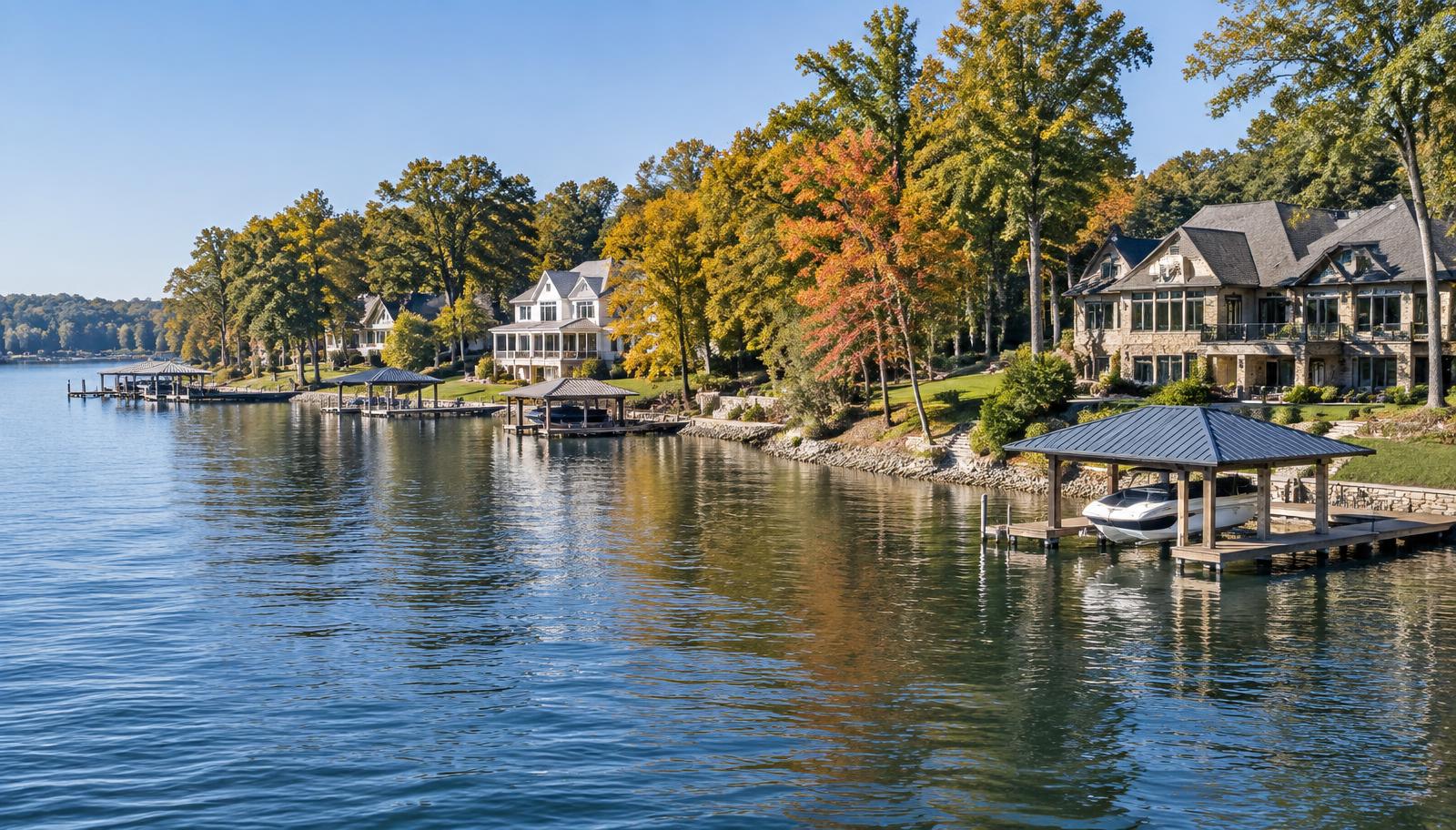
A market of micro-markets
The Lake Norman waterfront market rarely behaves like a single market, and that is especially clear in early fall. A home on a protected Cornelius cove is not competing in quite the same way as a newer property near Mooresville’s larger open-water reaches, a Denver home with a long drive to daily services, or an older Sherrills Ford house whose value rests as much in its shoreline and dock as in its interiors.
That distinction matters for anyone trying to make sense of active listings. The broader Lake Norman real estate market can offer a useful temperature check, but waterfront decisions tend to turn on particulars: water depth, dock configuration, views, road access, lot shape, renovation quality, and whether the property supports the way a buyer actually expects to use the lake.
This season, the properties drawing serious attention are generally the ones that make those details easy to understand. Homes that present a coherent combination of location, condition, shoreline utility, and realistic pricing can still move with purpose. Listings that ask buyers to overlook unresolved tradeoffs are more likely to sit while shoppers compare alternatives.
What is trading
Well-positioned waterfront homes are not necessarily the newest or largest. They are the ones where the proposition is clear from the start.
In Cornelius, that can mean a home with practical access to town, a usable dock, a view that feels meaningful from the primary living areas, and a floor plan that does not require an immediate redesign. Cornelius NC waterfront buyers often place a premium on convenience alongside the water itself: proximity to restaurants, grocery stores, schools, parks, and familiar daily routes can narrow the buyer pool less than a more remote setting.
In Davidson, homes with a quieter residential character and convenient access to the town’s walkable core can appeal to buyers who want lake living without making the waterfront their only amenity. In Huntersville, shoreline homes that balance water access with straightforward travel to employment centers and services can be especially compelling to households splitting their time between the lake and a regular weekday routine.
On the west and north sides of the lake, buyers are often willing to travel farther for a larger lot, more privacy, a broad view, or a newer home. Denver, Sherrills Ford, Troutman, and Mooresville each offer different versions of that equation. What tends to trade is not simply “more house for the money,” but a property whose location and site plan justify the drive for its intended buyer.
Move-in readiness remains influential. Buyers may accept a dated kitchen, older bath finishes, or cosmetic projects if the structure, waterfront setting, and major systems inspire confidence. They are less inclined to absorb a long list of uncertain repairs after paying for a premium location. A home that has been thoughtfully prepared, with maintenance records and waterfront features clearly documented, removes friction from the decision.
The value of usable water
For Lake Norman waterfront homes, “waterfront” is only the beginning of the conversation. Buyers are looking closely at how the shoreline works.
They may assess whether the property has a dock, the condition and permitted configuration of that dock, the walk from the house to the water, the character of the cove, the amount of boat traffic nearby, and how the view changes through the day. A sloping lot with beautiful water can suit one buyer perfectly and eliminate another. A protected cove can feel ideal for paddling and swimming, while someone focused on quick access to open water may read it differently.
These are not minor details to be resolved after an offer. They are central to value, and listings that explain them clearly tend to attract more qualified interest.
What is sitting
The listings that linger are often not bad homes. More commonly, they contain a mismatch between price and the compromises a buyer must make.
A property can sit when its asking position assumes buyers will value every improvement at face value. Renovations do matter, but high-end finishes do not automatically overcome a difficult lot, limited water presence from the house, an awkward approach to the dock, or a location that feels less convenient than comparable options.
Older homes can also stall when their condition is unclear. Many buyers are open to renovation, particularly when the parcel and shoreline are exceptional. But uncertainty is expensive. If a home suggests deferred maintenance, aging systems, or a complicated redevelopment path without enough information to frame the work, buyers may simply wait for a cleaner opportunity.
Overly ambitious positioning is another common factor. Waterfront sellers often see a neighboring sale or a headline-grabbing lake property and assume the comparison is direct. Yet a difference in cove location, water orientation, dock utility, road frontage, topography, or renovation level can materially change how buyers respond.
Seasonality plays a quieter role as well. September is still an active time to evaluate the lake, with warm-weather use fresh in mind and daylight sufficient to study a property’s setting. At the same time, buyers may be more selective after spending the summer seeing what various corners of the lake feel like on a busy weekend. A listing that looked compelling in a photograph may receive a more exacting read after buyers have experienced boat traffic, shade patterns, access roads, and dock routines firsthand.
How buyers can interpret the inventory
A longer market time is information, not a verdict. It may indicate that a property is overpriced, but it can also signal a narrow audience. A steep parcel, an older house with a remarkable shoreline, or a private setting farther from town can be exactly right for the right household.
The useful question is not simply why a home has not sold. It is whether the reasons other buyers have passed are reasons that matter to the buyer considering it now.
A practical review should include:
- How the property functions from house to shoreline, including stairs, pathways, grade, dock access, and storage for lake equipment.
- Whether the view, water exposure, and nearby boat activity match the intended use: entertaining, fishing, swimming, paddling, boating, or quiet retreat.
- The likely scope of near-term work, separating cosmetic preferences from repairs, maintenance, and waterfront infrastructure needs.
- The daily-life tradeoff of the location, including routes to Cornelius, Davidson, Huntersville, Mooresville, Denver, Sherrills Ford, or Troutman depending on where regular errands and commitments occur.
- The quality of the comparison set: not just square footage or bedroom count, but shoreline type, dock utility, lot usability, condition, and access.
That last point is essential. Two homes can appear comparable online while offering entirely different lake experiences. A buyer who wants sunset light, open-water views, and quick boating access may not value the same attributes as someone seeking calm water, a gentler yard, and a short drive into town.
The fall advantage: clearer priorities
Autumn often rewards buyers who have moved beyond the broad idea of wanting a lake house. By September, the better question is more specific: what kind of Lake Norman life should the property support?
For some, that means Cornelius NC waterfront close to established amenities and familiar routes. For others, it means a Mooresville home with room for extended family, a Denver property with a wider sense of space, a Sherrills Ford cove with privacy, or a Troutman setting that feels removed from busier stretches of the lake. Davidson and Huntersville offer their own combinations of water access, neighborhood character, and everyday convenience.
The market is most legible when buyers use those priorities as a filter. Homes that are trading tend to meet a defined need with few unanswered questions. Homes that are sitting often require a buyer to make a more intentional bargain: accept location, condition, access, or site limitations in exchange for another meaningful advantage.
That is not necessarily a warning. It is simply the work of buying waterfront property well. On Lake Norman, the strongest purchase is rarely the one with the longest feature list. It is the one whose shoreline, house, location, and maintenance demands fit together honestly for the life its next owner plans to lead.