Fishing Lake Norman, season by season.

On the Water

Fishing Lake Norman, season by season.

Thirty-two thousand acres of Catawba River impoundment holds one of the Piedmont's deepest species lists — spotted bass on every point, stripers in the discharge, and crappie stacked under every bridge. This is how the lake fishes across a full calendar year.

Chapter 01

What swims here.

Lake Norman's forage base is threadfin and gizzard shad, and everything else is built on top of it. Spotted bass have become the numbers fish, largemouth still own the shallow cover, and the stocked striped bass and hybrid population is the trophy fishery. Crappie, white perch, bream, and a very healthy catfish population round out a lake where you can catch something twelve months a year.
  • Largemouth bass — shallow cover and docks
  • Spotted bass — main-channel points and humps
  • Striped bass and hybrids — open water and discharges
  • Black and white crappie — brush piles and bridges
  • White perch — abundant, schooling, underrated
  • Channel and blue catfish — creek channels and flats
  • Bluegill and redear — riprap and dock shade

Chapter 02

Winter: the discharge season.

December through February is when serious striper anglers show up. The McGuire and Marshall thermal discharges hold water several degrees warmer than the rest of the lake, and bait — followed by stripers, hybrids, and white perch — stacks into those plumes. Live bait on freelines and planer boards is the traditional approach; a fast-moving flutter spoon works when they suspend. Elsewhere on the lake, spotted bass group tight on deep channel bends and can be caught all day on a jigging spoon or a drop-shot.

Chapter 03

Spring: the shallow window.

As surface temperatures climb through the 50s in March, crappie push into the backs of coves toward brush and blowdowns; by the time water hits the low 60s in April, largemouth are spawning on protected flats and the bite is as easy as it gets all year. Work squarebills and spinnerbaits on windblown pockets, then switch to a wacky-rigged stick bait for bedding fish. Late May pulls everything back out toward the first drop, and the topwater window opens at dawn.

Chapter 04

Summer: early, deep, or both.

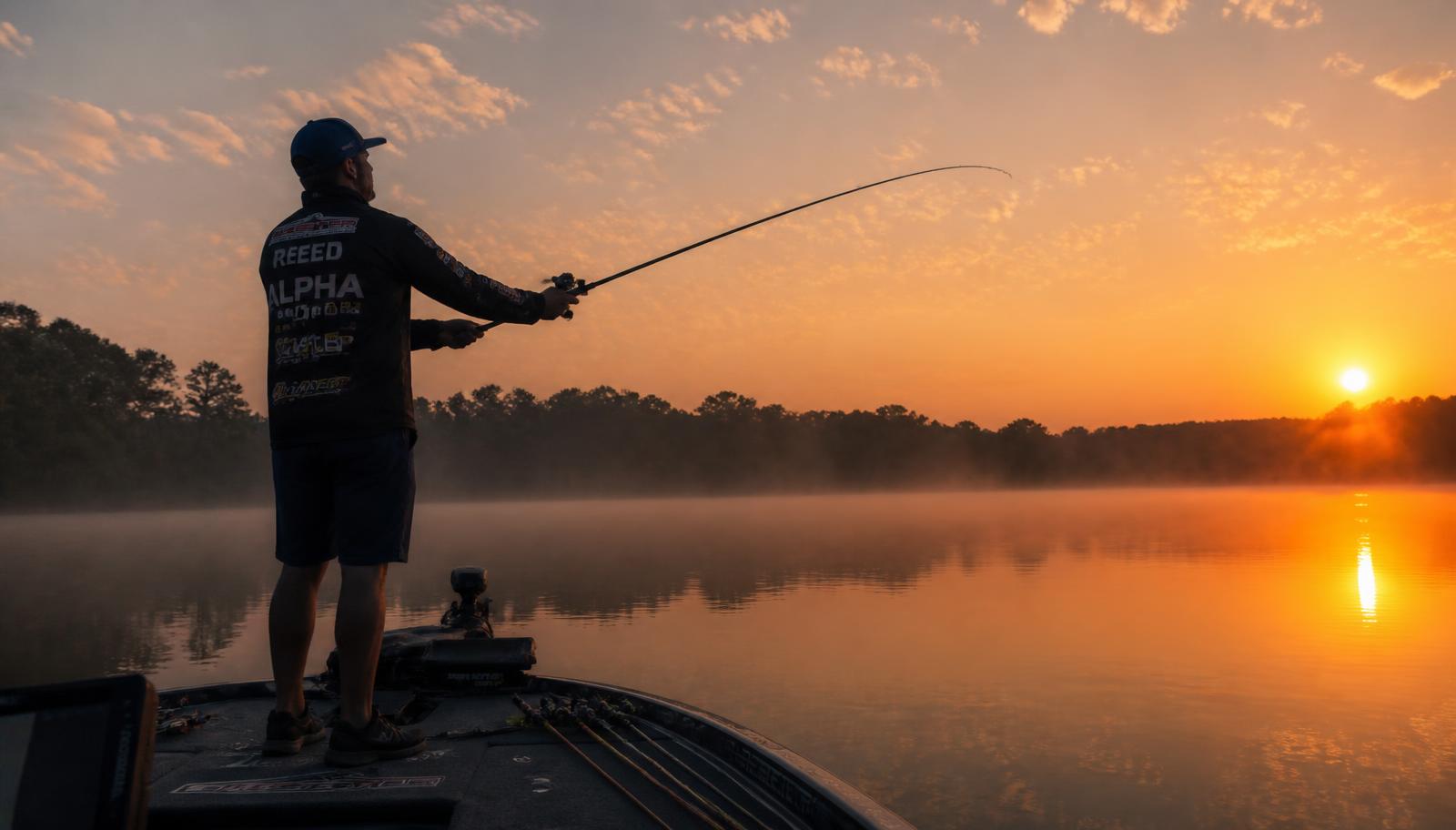
Once the lake stratifies, the thermocline between roughly 18 and 28 feet becomes the ceiling and the floor. Stripers suspend just above it over the main channel and are best found with electronics and downlines at first light. Spotted bass live on offshore humps and long points — drop-shot, Carolina rig, and a deep crankbait cover it. From nine in the morning until the evening lull, boat traffic makes the main body unfishable; the productive hours are 5:30 to 9 a.m. and the last ninety minutes of light.

Chapter 05

Fall: the shad migration.

October and November are the lake's most exciting weeks. Cooling water pushes shad into the creeks and every predator in Lake Norman follows them. Surface schooling activity is common — stripers and spotted bass corralling bait in open water — and a topwater walking bait or a small swimbait thrown into a breaking school is as good as fishing in the Southeast gets. Turnover in mid-November scatters things for a week or two, then the winter pattern sets in.

Chapter 06

Where to launch, and where to fish from shore.

Nine free public access areas ring the lake — Ramsey Creek, Blythe Landing, Stumpy Creek, Pinnacle, Beatties Ford, Long Island, NC 150 Bridge, McCrary, and Hager Creek — each with ramps and trailer parking. Bank anglers do best from the fishing pier and riprap at Lake Norman State Park, the shoreline at Ramsey Creek Park, and the rock at the access areas. Almost all remaining shoreline is private, so shore-fishing plans should start with the public list.
  • Ramsey Creek Park — Cornelius
  • Blythe Landing — Huntersville
  • Stumpy Creek — Mooresville
  • Pinnacle Access — Troutman
  • Beatties Ford Access — Denver side
  • NC 150 Bridge Access — Sherrills Ford
  • Lake Norman State Park pier — Troutman

Chapter 07

Licenses, limits, and etiquette.

Anyone 16 or older needs a North Carolina inland fishing license; the whole lake is in-state, so there is no reciprocal-license question. Creel and size limits are set by the NC Wildlife Resources Commission and change periodically — check current regulations before keeping fish, particularly for striped bass, where seasonal harvest rules apply. On the water, give bank anglers and docked boats a wide berth, keep wake off anchored fishermen, and remember that most of what looks like open shoreline is somebody's front yard.

Frequently Asked

Questions people ask about this.

What fish are in Lake Norman?
Largemouth bass, spotted bass, striped bass and hybrids, white perch, black and white crappie, bluegill and redear sunfish, channel and blue catfish, and yellow perch. Spotted bass and white perch are the most abundant; striped bass draw the most serious anglers.
Do you need a fishing license on Lake Norman?
Yes. A North Carolina inland fishing license is required for anyone 16 or older. Lake Norman is entirely within North Carolina, so no reciprocal license is needed, and licenses are available online from the NC Wildlife Resources Commission or from local tackle shops.
Where is the best fishing on Lake Norman?
The warm-water discharges near McGuire and Marshall in winter, the main-channel points and humps for summer spotted bass, the shallow cove backs in April for spawning largemouth, and bridge pilings and brush piles year-round for crappie.
What is the best time of year to fish Lake Norman?
March through May for largemouth and crappie in shallow water, June through September for early-morning topwater and deep spotted bass, and December through February for the year's best striped bass fishing in the thermal plumes.
Can you fish from the bank on Lake Norman?
Yes. Lake Norman State Park's fishing pier, the riprap at the public access areas, Ramsey Creek Park, Blythe Landing, and Stumpy Creek all offer bank access. Most other shoreline is private.
Are there striped bass in Lake Norman?
Yes — Lake Norman holds a stocked striped bass and hybrid fishery. Fish concentrate in the warm-water discharge areas in winter and suspend over the main channel near the thermocline in summer.
Ready to dig deeper into the lake?

Plan Your Visit