What actually lives in Lake Norman.

Lake Life

What actually lives in Lake Norman.

No alligator population. No sharks. A great many herons, bass, water snakes, and — if you are up early on a quiet arm — bald eagles.

Chapter 01

Alligators: the honest answer.

There is no established alligator population in Lake Norman. American alligators do live in North Carolina, but their resident range is the coastal plain — the southeastern corner of the state, several hundred miles east, where winters are milder and the water stays warm enough. The Piedmont is at the cold edge of what the species tolerates. Individual animals have occasionally been reported in inland waters, typically relocated or released, and wildlife officials investigate those reports. None of that amounts to alligators living in this lake, and no swimmer here needs to think about them.

Chapter 02

Sharks: no.

Lake Norman is a freshwater reservoir impounded on the Catawba River in 1963. There is no ocean connection, no saltwater, and no plausible route for a marine species to arrive. The recurring 'shark in Lake Norman' story is one of the region's most durable running jokes, revived every few summers with a doctored photograph. It is folklore, and locals enjoy it as such.

Chapter 03

Snakes, which are real and mostly harmless.

The snake you see swimming with its head out of the water along a riprap bank is almost always a northern water snake. It is non-venomous, defensive if cornered, and constantly misidentified as a cottonmouth — a species whose range does not extend to this part of the Piedmont. The one to respect is the copperhead, which lives in the woods, leaf litter, and brushy shoreline around the lake rather than in it. Watch where you put your hands around rock walls and woodpiles, wear shoes on trails, and leave any snake alone.
  • Northern water snake — common, non-venomous
  • Copperhead — venomous, in woods and shoreline brush
  • Black rat snake and black racer — harmless, beneficial
  • Cottonmouths are not resident in this region
  • Most bites happen when someone handles the snake
  • Shoes on trails, care around rock and woodpiles

Chapter 04

The fishery.

Lake Norman is a serious bass lake. Largemouth and spotted bass draw tournaments through much of the year, striped bass run the main channel, and white perch are so abundant they have become a management story of their own. Crappie stack on brush piles and bridge pilings, bluegill fill the coves in spring, and blue and channel catfish work the deeper channel edges. The forage base is threadfin and gizzard shad, and the entire seasonal pattern of the lake — where fish are, and when — follows where that bait moves with water temperature.
  • Largemouth and spotted bass
  • Striped bass on the main channel
  • White perch, in extraordinary numbers
  • Crappie on brush and bridge structure
  • Bluegill and sunfish in the coves
  • Blue and channel catfish

Chapter 05

Birds worth looking up for.

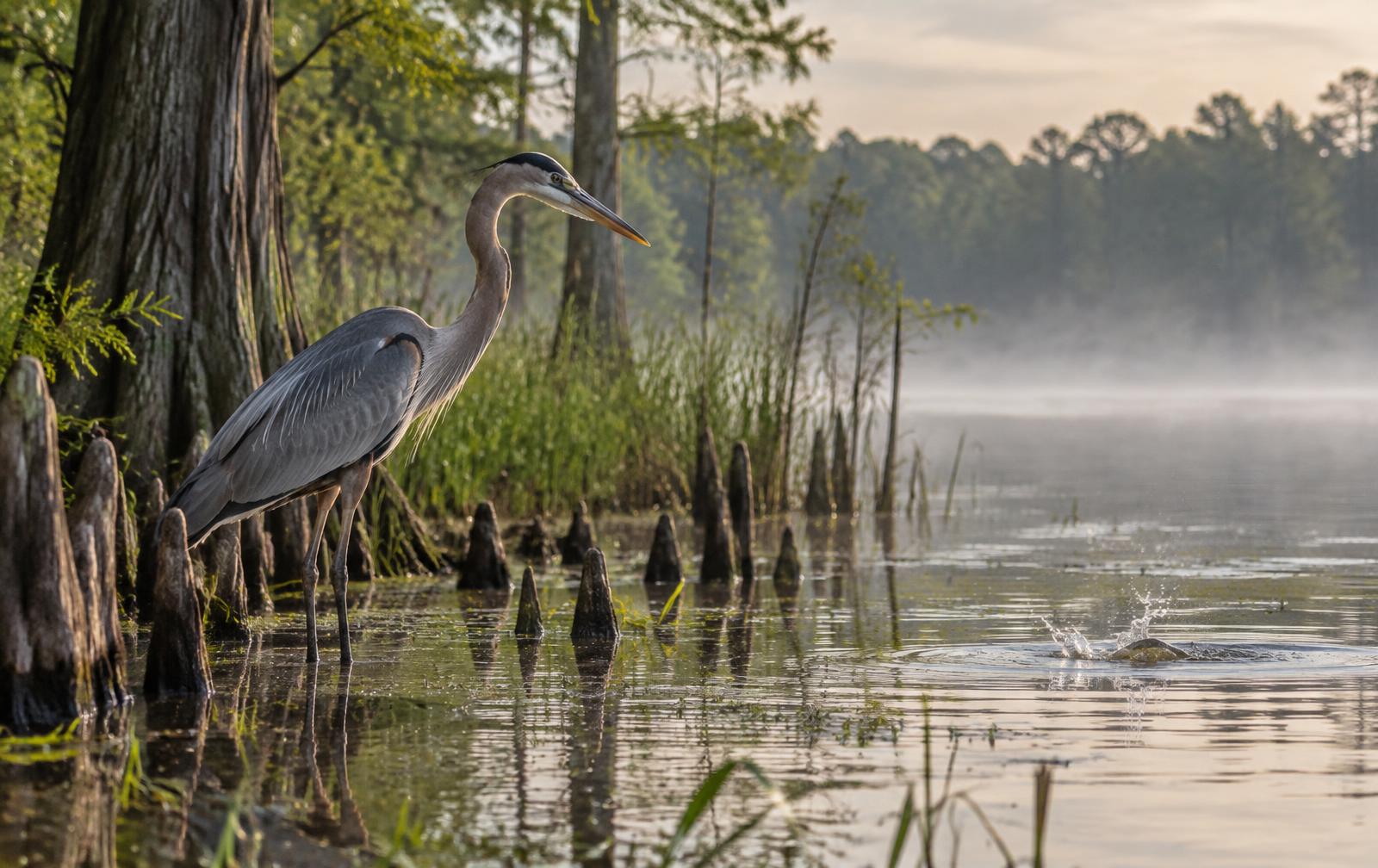
Great blue herons stand in nearly every shallow cove. Ospreys nest on channel markers and light poles and fish in plain view all summer. Bald eagles have recovered strongly across the Catawba chain and are seen regularly on the quieter northern arms and around Lake Norman State Park. Add kingfishers, double-crested cormorants, great egrets, and a substantial winter waterfowl population, and the lake becomes a legitimate birding destination in the months when the boats are put away.

Chapter 06

Everything else on the shoreline.

White-tailed deer are everywhere, including inside neighborhoods. Beaver and river otter work the creek arms; muskrat, raccoon, opossum, and red fox are common; coyotes are present across the Piedmont and heard more often than seen. Painted and snapping turtles line every sunny log, and spring evenings belong to the frogs. None of this is exotic — it is simply a large, wooded, well-watered piece of the Carolina Piedmont that happens to have 520 miles of edge habitat.

Frequently Asked

Questions people ask about this.

Are there alligators in Lake Norman?
No established alligator population lives in Lake Norman. The species' resident range in North Carolina is the coastal plain, several hundred miles east and in far warmer water. Rare individual sightings have been reported and investigated over the years, but the lake's winter temperatures make it unsuitable habitat.
Are there sharks in Lake Norman?
No. Lake Norman is a freshwater reservoir on the Catawba River with no connection to the ocean. The recurring 'shark in Lake Norman' stories are long-running local jokes and hoaxes, not sightings.
Are there snakes in Lake Norman?
Yes — mostly northern water snakes, which are non-venomous and frequently mistaken for cottonmouths. Copperheads live in the surrounding woods and shoreline brush and are the one venomous species you are realistically likely to encounter near the lake.
Is it safe to swim in Lake Norman?
Generally yes. The usual cautions are boat traffic, cold water in shoulder seasons, electrical safety around docks, and avoiding swimming after heavy rain when runoff raises bacteria levels. Wildlife is not the meaningful risk here.
What fish live in Lake Norman?
Largemouth and spotted bass, striped bass, white perch, crappie, bluegill, catfish, and a substantial shad forage base. The lake is a well-known bass fishery and hosts tournaments through much of the year.
What birds can you see at Lake Norman?
Great blue herons, ospreys, bald eagles, kingfishers, cormorants, egrets, and large winter waterfowl concentrations. Eagles nest on the quieter arms and are seen regularly around the state park and the upper lake.
Ready to dig deeper into the lake?

Plan a Day on the Water